
Welcome to the People’s Republic of New York City
Concerns over economic inequality and concentration of wealth, costly healthcare and education, lack of affordable housing, social injustice, along with a dislike of capitalism, have led to a resurgence of support for socialist policies. While there is no harm in intellectual curiosity, socialism will not improve affordability, because someone will still need to pay for it. And that someone will more than likely be small businesses and the middle class.
New York City Mayor Zohran Mamdani, who is a member of the Democratic Socialists of America, assumed office on January 1, 2026. His first seven months in office have shown that he is well on the way to changing America’s financial capital to the People’s Republic of New York City. His 100 promises include making city buses fare-free, building five government-run grocery stores with “lower prices,” freezing rents for more than two million stabilized apartments, and constructing 200,000 publicly subsidized affordable housing units by 2036.
More affordable housing, free public transportation, and cheap groceries all sound great. However, they come with a very high cost to taxpayers. According to the Real Estate Board of New York, the cost of building a single affordable housing unit with union labor (per Mayor Mamdani’s mandate) ranges from $800,000 to $1 million. The city’s Independent Budget Office estimates the primary cost of offering free buses for fiscal year 2027 to be $1.1 billion.
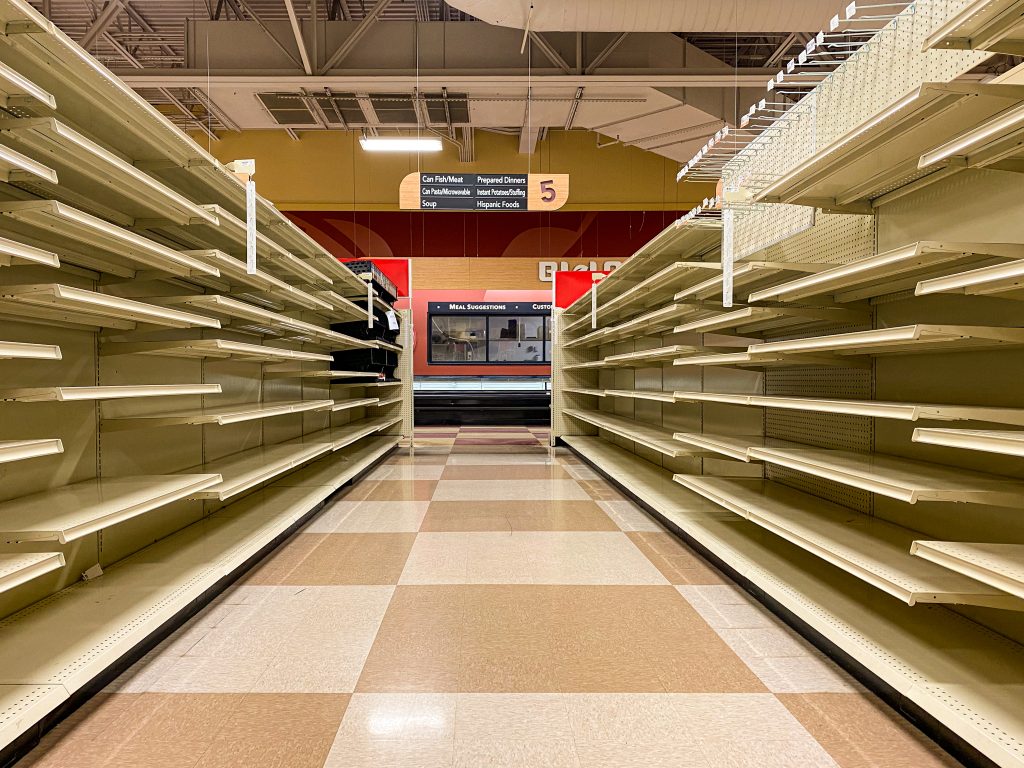
The five city subsidized grocery stores are estimated to cost $70 million, with a promised 30 percent discount on core goods like milk, bread, cheese, and produce, but they will not include butchers or hot food. Shoppers are outraged that the city will be deciding what they can buy and understand that it will lead to empty shelves and food shortages in the worst traditions of a socialist economy. A Cuban immigrant said, “In the end, it all costs more, and you get less.” And City Councilman Phil Wong (D) said, “Back in mainland China where my parents and grandparents fled, these state-owned grocery are price controlled, but because they are price controlled, the shelves are empty.”
The government-run grocery idea is a fiscal failure from the start. The unfair competition the government stores will create is being challenged in a lawsuit by the Multicultural Business Coalition comprised of 50 local chambers of commerce whose members are mostly immigrants. And as July 26, 2026, New York Post article noted, $70 million could buy more than 1 million annual Costco memberships.
After Mayor Mamdani infamously stood in front of the building where Citadel CEO Ken Griffin has a second home penthouse, the state legislature with Governor Kathy Hochul’s (D) support approved a pied-à-terre tax for “certain properties in NYC that are not used as a primary residence.” On July 27, 2026, the city’s Department of Finance released a list of more than 960,000 properties and individuals who may be subject to the new surcharge, despite the mayor’s initial estimate of 31,000 properties. The list features two City Council members, both of whom have resided in the alleged second homes for decades and questioned the credibility of the list. And the process of appealing the tax is appalling and alarming, since homeowners are guilty until they prove themselves innocent, and the process is convoluted and costly. For example, if the property owner believes the valuation is inaccurate, the instructions direct them to the Tax Commission, where the challenge will be reviewed, but that will invalidate any exemption from the tax by the Department of Finance.
For his plans to turn New York City into a socialist utopia through his economically ruinous initiatives, Citizens Against Government Waste named Mayor Mamdani its March 2026 Porker of the Month. But his socialist plot is just the tip of the iceberg. As more politicians promote similar proposals across the country, taxpayers should be wary that the U.S. like the Titanic is going to sink. Rather than increasing government giveaways and handouts that increase costs to taxpayers and exacerbate rather than solve any perceived problems, it would be far more effective to improve government efficiency, increase transparency, expand economic opportunities, and eliminate waste, fraud, abuse, and mismanagement.
