
The Railroad Merger that Deserves a Ticket to Ride
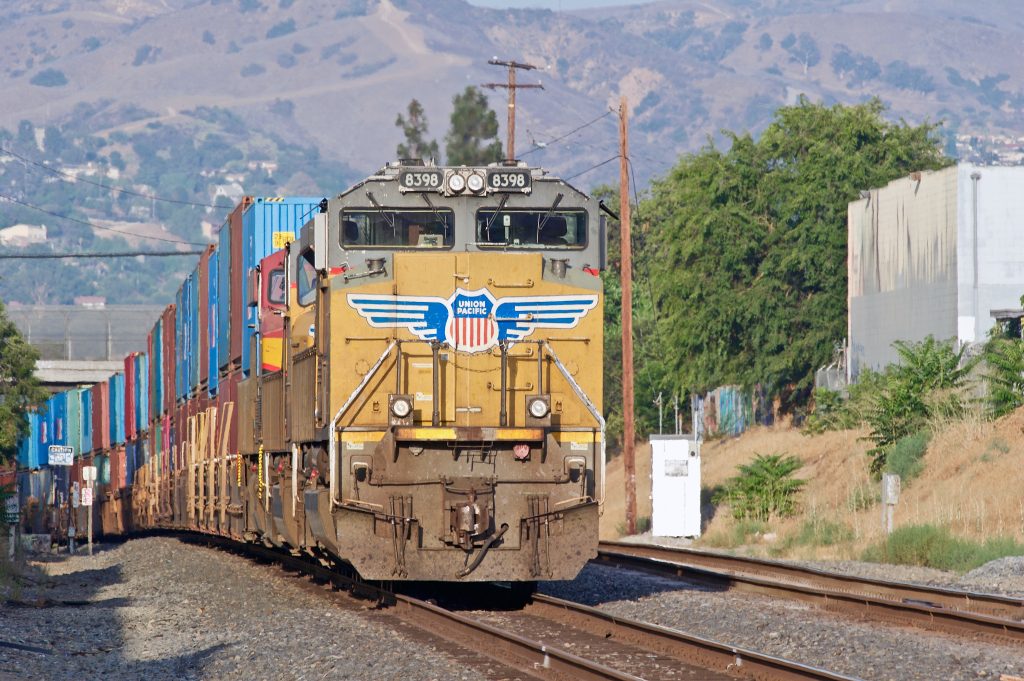
Among all means of transportation, there has always been a fascination with railroads. Thousands of rail cars are loaded with goods and passengers and pulled toward their destinations by powerful locomotives. Millions of miles of steel tracks span across the vast American continent, reminding the nation what can be achieved with hard work and industrial genius.
Unfortunately, after decades of arbitrary trust-busting which began with the U.S. Supreme Court decision in Northern Securities Co. v. United States, 193 U.S. 197 (1904), the United States ended up with a highly fragmented and disruption-prone railroad system that resulted in lower demand and harm to consumers and producers. Although freight rail is run and financed by the private sector, there has never been a transcontinental freight railroad. Trains must wait for days at interchange points between different operators, which raises costs, reduces efficiency, and delays delivery.
But that process may soon be ripe for a significant change after the Surface Transportation Board (STB) accepted a revised Union Pacific-Norfolk Southern (UP-NS) merger application on May 28, 2026. This merger would create America’s first transcontinental freight railroad with a single-line freight service, leading to modernized rail infrastructure, improved quality, and lower costs.
The STB has not made a final ruling on the merger. On July 27, 2026, Union Pacific and Norfolk Southern submitted additional information on the transaction, detailing new commitments and offering customer protections that go beyond those provided in any prior rail merger. After reviewing that supplemental information, the STB lifted its abeyance, clearing the way for the merger review to move forward. The next step in the process is for the STB to spend up to a year gathering additional information and further examining the record. This is the first railroad merger being considered under STB’s updated rules requiring that the proposed deal enhances, not merely preserves, competition. The UP-NS merger appears to meet that new standard.
The merger will not force any head-to-head competitors out of the market. While Union Pacific primarily operates west of the Mississippi River, almost all Norfolk Southern lines are to the east of the river. The deal merely combines two railroads that serve two different areas of the country with minimal overlap, creating one continuous line of service from coast to coast. If the merger is approved, there would be a significant reduction in the need for rail transfers and freight handoffs, increasing the efficiency of freight rail and thus reinvigorating the American railroad industry.
The UP-NS merger will also increase competition with the trucking industry. In addition to the default cost of trucking already being three times higher than that of rail transportation, trucking costs have recently grown due to fluctuating gas prices and market volatility. Shippers using the merged network as opposed to freight trucking are estimated to save $3.5 billion per year. Increased use of trains means fewer trucks on the road and less wear and tear on taxpayer-supported federal highways, as well as decreased emissions.
The usual suspects, including policymakers, trucking-dominated labor groups, foreign competitors, and trade organizations are unsurprisingly objecting to the merger. For example, Senate Minority Leader Chuck Schumer (D-N.Y.) has criticized the deal as a “hostile takeover of America’s infrastructure.” Others are concerned that the UP-NS merger will undermine competition and monopolize Class I freight rail traffic. A November 14, 2025, joint letter opposing the merger signed by nine state attorneys general was sent to the STB. The letter claimed that “the proposed merger between Union Pacific and Norfolk Southern will result in undue market concentration that stifles competition […].” However, authors of the letter remain open to the proposal, provided it “clearly enhances competition, improves service for rail customers, preserves accountability, and advances safety.” Luckily for everyone, it does.
In 2023, the STB approved the similar $31 billion merger between Canadian Pacific (CP) and Kansas City Southern (KCS), noting that the transaction would enhance transportation efficiency and increase competition. As expected, the deal resulted in better railroad performance. In 2023, the average speed of CPKC trains was 17.8 miles per hour. As of June 2026, the average CPKC train speed is 20.7 miles per hour. In 2023, the average terminal dwell for CPKC trains was 10.4 hours, and by June 2026, it decreased to 8.8 hours. Approval of the UP-NS final application would be consistent with the STB’s previous support of the CP-KCS merger.
The UP-NS merger will encourage competition, innovation, efficiency, and long-term economic growth. A stronger rail network will help businesses move goods more reliably, strengthen supply chains, and keep the U.S. globally competitive. If STB applies its own standards consistently, it should conclude that the merger in question serves the public interest and deserves a ticket to ride.
