
Artemis Moon Mission Delayed Again
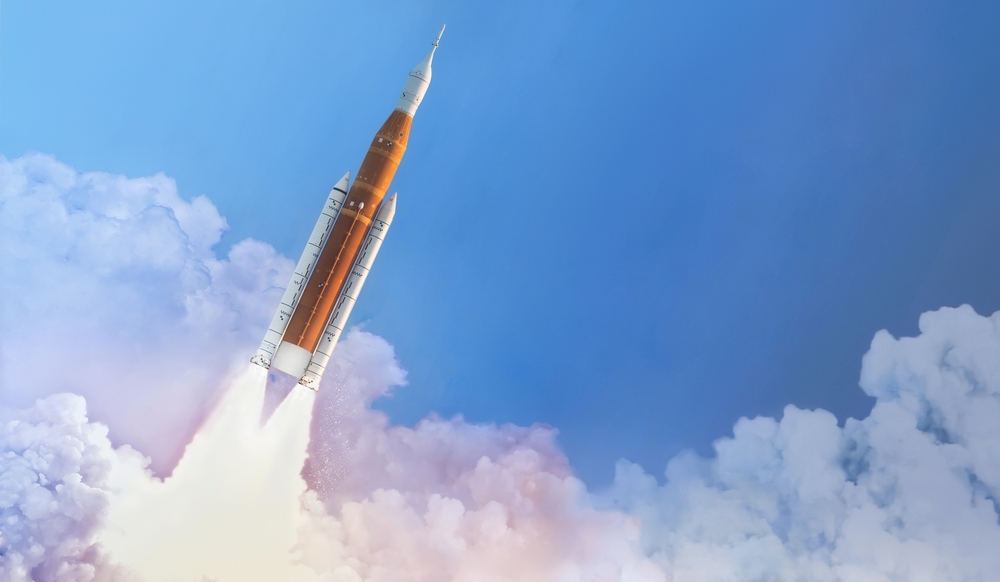
The United States has not been to the moon since Apollo 17 in 1972. On December 11, 2017, President Trump signed Space Policy Directive 1 to return U.S. astronauts to the Moon, but that has still not happened. The initiative, later rebranded Artemis, was built upon multiple legacy National Aeronautics and Space Administration (NASA) components including the Space Launch System (SLS) and the Orion capsule that had been in development for years. After SLS problems including leaking helium substantially twice delayed its uncrewed maiden voyage, Artemis I launched on November 16, 2022.
Now, the launch of Artemis II, a mission to send four crew members in an Orion spacecraft on a lunar flyby, is in jeopardy due to more problems with helium in the SLS. While undergoing tests on the launch pad on February 21, 2026, NASA detected problems with the flow of helium in the upper stage of the SLS. The SLS will be wheeled off the launch pad, with the next launch window opening in April 2026.
Technical difficulties, delays, and cost increases have hounded the SLS since its inception, calling into question the ultimate viability of Artemis. In 2014, NASA estimated that Artemis I would cost $10.2 billion. As of December 2019, the price had reached $14.8 billion. A March 10, 2020, NASA Office of Inspector General (OIG) report blamed both Boeing, the SLS’s prime contractor, and NASA for lax oversight that led to poor performance and spiraling costs in the program. Every main component of the rocket designed for the first Artemis test “experienced technical challenges, performance issues, and requirement changes that collectively have resulted in $2 billion of cost overruns and increases and at least 2 years of schedule delays.”
The report also projected several cost increases that would be incurred should the SLS fail to meet a series of launch deadlines, all of which were subsequently missed. The delay of the November 2020 launch to spring 2021, more than two years after the first proposed launch date, increased costs to $18.3 billion, and further delays compounded the price tag.
The total costs for the SLS and Orion programs were projected to reach $50 billion by 2024, and this figure would rise steadily as SLS testing was shunted further along in the decade. An October 12, 2023, NASA OIG report found that total Artemis costs will reach “$93 billion from fiscal year 2012 through 2025, with SLS Program costs representing 26 percent ($23.8 billion) of that total.”
Boeing has also faced heavy criticism of its Starliner spacecraft, a vessel unrelated to Artemis designed to operate in low earth orbit. During its first crewed flight to the International Space Station (ISS) on June 5, 2024, Boeing’s Starliner experienced anomalies forcing the return of the empty vessel to earth without the two astronauts, who waited nine months to be transported to Earth on SpaceX’s Crew Dragon craft on March 18, 2025.
On February 19, 2026, NASA officially designated the event as a Type A mishap, defined as a failure that results in more than $2 million in damage, loss of a vehicle, or a fatality; the same category as the fatal space shuttle disasters of 1986 and 2003. According to NASA, “Due to the loss of the spacecraft’s maneuverability as the crew approached the space station and the associated financial damages incurred, NASA has classified the test flight as a Type A mishap. While there were no injuries and the mission regained control prior to docking, this highest-level classification designation recognizes there was potential for a significant mishap.”
NASA Administrator Jared Isaacman admitted in a February 19, 2026, press conference that the failure Starliner failure amounted to “cost thresholds exceeding a Type A mishap by a factor of over a hundred.” This means that the vessel’s failure might have caused hundreds of millions of dollars in damages, implying that it could have led to significant damage to or loss of the ISS. Administrator Isaacman acknowledged inadequate oversight by NASA of Boeing’s Starliner program, stating, “As development progressed, design compromises and inadequate hardware qualifications extended beyond NASA’s complete understanding.” In the meantime, Starliner will continue to operate under a cloud of uncertainty, facing a reduction in the number of flights and increased oversight.
NASA is learning the hard way the danger of its overreliance on legacy contractors that operate on outdated technology. As detailed in a January 2022 report by Citizens Against Government Waste (CAGW), in recent years, long-established aerospace contractors have been lapped by new entrants in the market. As the report noted, CAGW had promoted the privatization of space exploration since the organization was created to follow up on the recommendations of the 1984 Grace Commission, which first made that proposal.
The chief argument for the old guard of aerospace had long been reliability. However, their struggles paired with the successes of the next generation of aerospace firms means this justification no longer holds water. Innovative technologies have paired dramatic cost reductions with increased launch capacity, safety, and reliability. The time has come to rethink Artemis, increase congressional oversight, and for NASA to fully embrace the most effective technology available on the market.
